The best RPGs with little or no inventory management are Citizen Sleeper, Mass Effect 2, Wildermyth, Undertale, Transistor, I Was a Teenage Exocolonist, Suzerain, and The Life and Suffering of Sir Brante.
There are two different chores hiding inside “inventory management.” One is physical housekeeping: carry limits, full bags, vendor trips, and deciding which twelve iron swords to keep. The other is build work: comparing stats, arranging abilities, and choosing a loadout. Every game here removes the first problem. A few still have meaningful build decisions, and those are called out instead of quietly relabeling them as “streamlined.”
Start here
- Best overall: Citizen Sleeper
- Best big-budget RPG: Mass Effect 2
- Best tactical RPG: Wildermyth
- Best action RPG: Transistor
- Least inventory of any kind: Suzerain
1. Citizen Sleeper
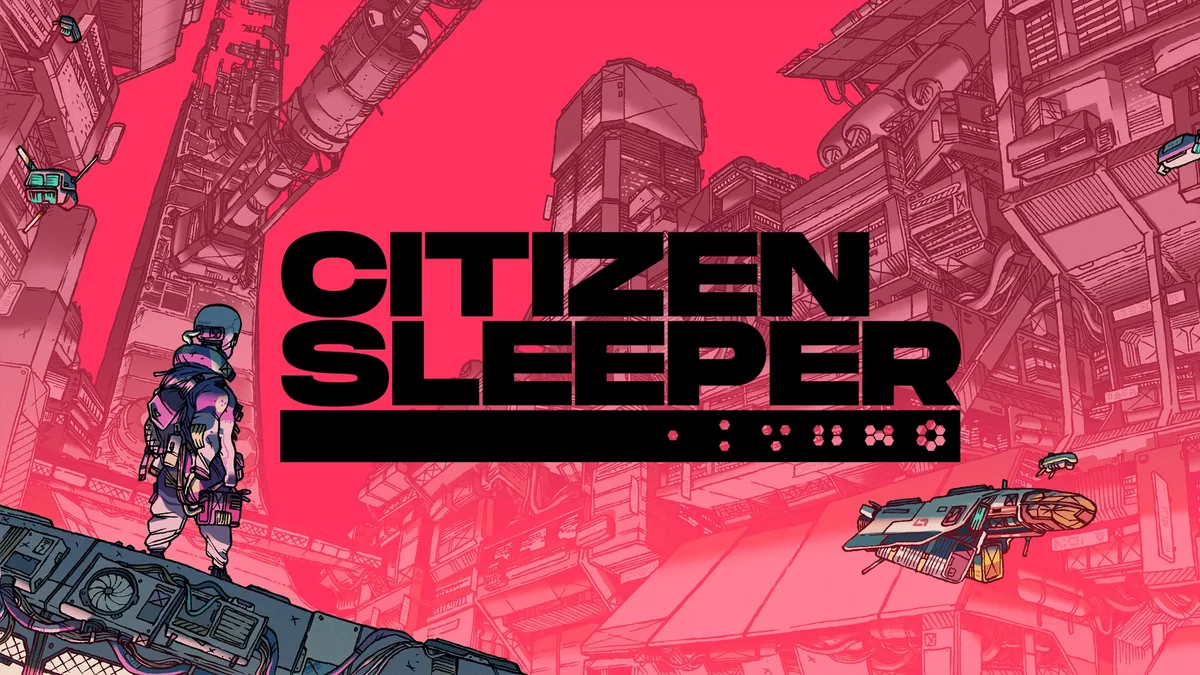
Citizen Sleeper keeps the role-playing and removes the backpack. Each cycle gives you a pool of dice, and you place those dice on work, relationships, investigations, or risky opportunities around Erlin's Eye. Money, food, condition, and a few components matter, but you are not vacuuming weapons off the floor or interrupting a story to compare gloves.
That makes it the best overall fit for this search. Character growth happens through skills, choices, and the people you decide to help. Its pressures are about limited time and a body that needs maintenance, not the maximum weight that body can carry.
The tradeoff is obvious: this is a reading-heavy narrative RPG with no conventional combat. Someone looking for dungeons and sword swings will find an excellent RPG that does not resemble the one they had in mind.
Inventory burden: Essentially none. You manage dice and a handful of resources rather than equipment piles.
Platforms: PC, macOS, PS4, PS5, Xbox One, Xbox Series X|S, Nintendo Switch, and Nintendo Switch 2.
2. Mass Effect 2
Mass Effect 2 is the big-budget answer. BioWare reacted to the first game's notorious piles of guns and armor by stripping the sequel down to a fixed arsenal. Weapons are unlocked rather than collected as endless stat variations, quest objects take care of themselves, and Shepard chooses a squad loadout before a mission.
There is still RPG administration. You spend squad points, research upgrades, select armor pieces, and scan planets for resources. The important difference is that a mission never ends with ten minutes of selling identical assault rifles. Most decisions change a power, weapon, squadmate, or the Normandy instead of making space in a bag.
The awkward part is where to begin. Mass Effect 2 is much better with the first game's choices and relationships behind it, but Mass Effect 1—even in Legendary Edition—is the exact inventory offender this article is trying to avoid. A story recap works if inventory irritation outweighs the appeal of importing your own Commander Shepard.
Inventory burden: No traditional loot inventory; light loadout and upgrade management.
Platforms: PC, PlayStation, and Xbox through Mass Effect Legendary Edition.
3. Wildermyth
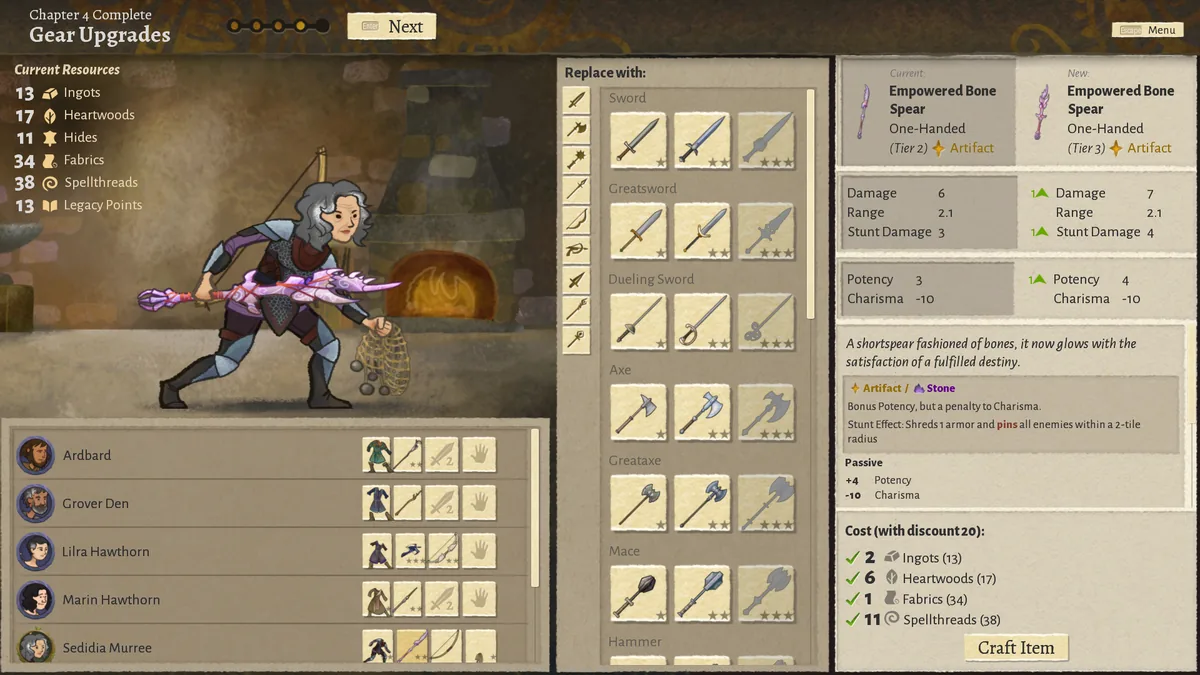
Wildermyth has swords, armor, and crafting materials, yet its official equipment guide says the quiet part plainly: the game does not intend for players to spend time managing inventory. Gear belongs to a hero and cannot be traded between party members. When a reward appears, you either replace that hero's current item, salvage it for resources, or move on. There is no communal chest slowly becoming a landfill.
That directness suits the rest of the game. Heroes age, build relationships, transform, and sometimes survive long enough to enter your legacy. Tactical battles and story events decide who they become; optimizing the resale value of fourteen spare cloaks does not.
You will still manage a growing cast. Abilities, crafting upgrades, injuries, and legacy heroes create plenty of decisions across a campaign. They are character decisions rather than warehouse work, but this is not the low-systems choice on the list.
Inventory burden: Light. Gear choices happen at the moment of acquisition, with no trading or hoarding afterward.
Platforms: PC, macOS, Linux, PS4, PS5, Xbox One, Xbox Series X|S, and Nintendo Switch.
4. Undertale
Undertale solves inventory bloat with an almost comically small bag: eight slots. One weapon and one piece of armor can be equipped, healing items fill the remaining space, and the game is short enough that its item list never becomes a second hobby.
The tiny limit occasionally asks for an actual decision before a difficult fight, but there is little sorting and no carry weight. More importantly, Undertale's real progression lives in conversations, enemy encounters, and what you choose to do when the battle menu offers options other than Attack.
It is a deliberately odd RPG with simple visuals and bullet-dodging defense sequences. Those are bigger reasons to accept or reject it than anything in its item box.
Inventory burden: Tiny. Eight total slots and straightforward equipment.
Platforms: PC, macOS, PS4, PS Vita, Xbox One, Xbox Series X|S, and Nintendo Switch.
5. Transistor
Transistor has no loot bag full of disposable weapons. Instead, every Function you unlock can serve as an active ability, modify another Function, or occupy a passive slot. The same small collection produces very different builds depending on where each piece is installed.
This is excellent if the annoying part of inventory is clutter. Nothing is vendor trash, nothing has weight, and each new Function expands the combat system instead of adding a slightly bluer sword. Battles mix real-time movement with a planning mode that lets Red queue actions, then execute the sequence in a burst.
It is less suitable if “inventory management” means any time spent configuring a character. Function placement is a major pleasure of Transistor, and refusing to experiment with it removes much of the game. The menus are meaningful, but they are still menus.
Inventory burden: No loot housekeeping; moderate ability-loadout tinkering.
Platforms: PC, macOS, Linux, PS4, and Nintendo Switch.
6. I Was a Teenage Exocolonist
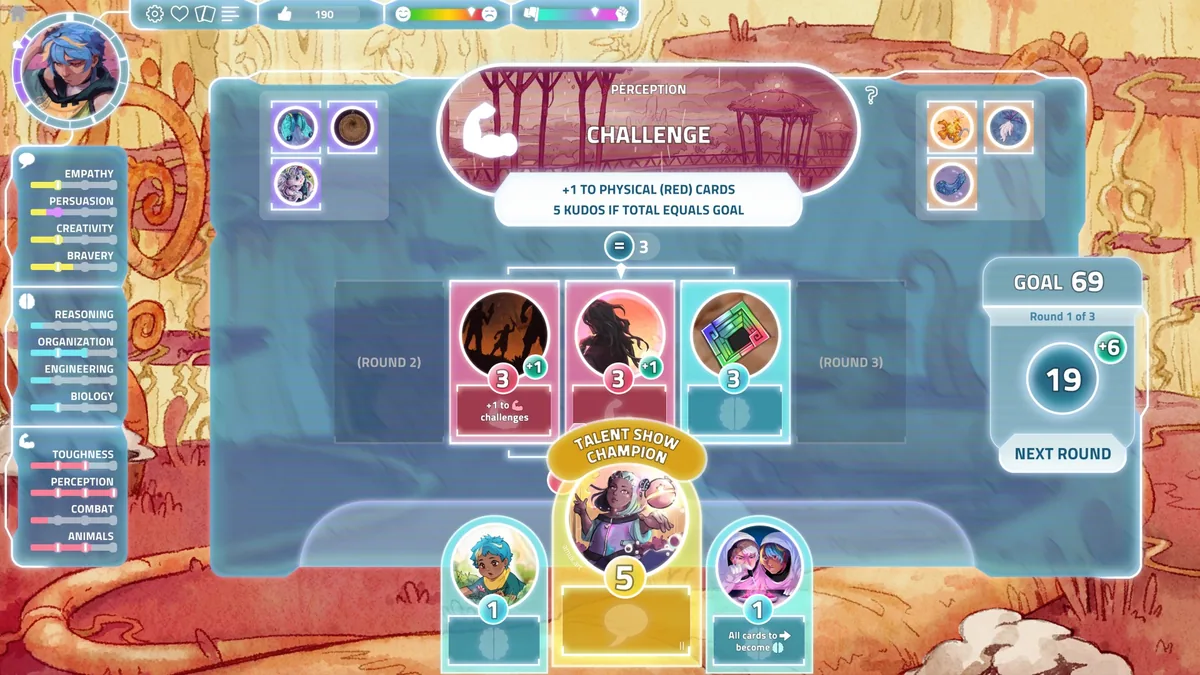
I Was a Teenage Exocolonist replaces conventional RPG gear chasing with memories represented as cards. Growing up on Vertumna means choosing jobs, relationships, studies, and expeditions; major challenges ask you to form poker-like hands from the experiences you have collected.
There is a gear screen, but it is small and permanent. Collectibles and a few bonuses accumulate without carry limits, durability, or the need to sell junk after every trip outside the colony. Most of the organizing happens when choosing cards for a challenge, not when cleaning up afterward.
That distinction may not save it for somebody who dislikes deckbuilding too. Exocolonist has hundreds of cards and is designed for repeated lives, so it trades equipment comparison for a different kind of collection. It fits players who hate loot chores, not players who want character progression to be automatic.
Inventory burden: Light gear management, with card-hand decisions taking its place.
Platforms: PC, macOS, Linux, PS4, PS5, and Nintendo Switch.
7. Suzerain
Suzerain asks you to manage an entire country but never a pair of boots. As President Anton Rayne, you make political appointments, negotiate with factions, sign or veto bills, respond to foreign powers, and attempt to drag Sordland through an economic crisis. RPG progression is expressed through your history, principles, alliances, and consequences.
There is no equipment screen, loot, crafting, or carry capacity. There are, however, national budgets, policy tradeoffs, public opinion, and a great many names to remember. Suzerain removes inventory administration by replacing it with presidential administration, which is either exactly the escape you wanted or a very funny misunderstanding.
Inventory burden: None. Political and economic management is substantial.
Platforms: PC, macOS, PlayStation, Xbox, Nintendo Switch, iOS, and Android.
8. The Life and Suffering of Sir Brante
The Life and Suffering of Sir Brante plays out across the pages of its protagonist's journal. Choices develop Brante's traits, relationships, career, and place in a rigid fantasy society. The game tracks what your decisions have done to the family and the wider empire; it does not ask where Brante stored the resulting quest objects.
Like Suzerain, this sits at the narrative edge of the RPG genre. There are stats, branching paths, character development, and severe consequences, but no explorable world or tactical combat. It is also grim, text-heavy, and happy to lock options behind earlier choices. Removing the inventory does not make the life any less complicated.
Inventory burden: None. Character stats and branching decisions replace equipment progression.
Platforms: PC, with mobile versions also available.
Famous RPGs that do not qualify
Baldur's Gate 3 has useful sorting, searchable bags, a camp chest, and generous carrying capacity. It still showers four party members with weapons, scrolls, potions, arrows, ingredients, and objects you might need later. Great RPG; poor escape from quartermaster duty.
The Witcher 3, Skyrim, Cyberpunk 2077, Divinity: Original Sin 2, and most loot-driven action RPGs fail for the same basic reason. An unlimited stash does not remove inventory management. It moves the mess to a larger room.
If the real irritation is repetitive battles rather than backpacks, the guide to turn-based RPGs without mandatory grinding tackles that problem separately. For a wider search by mood or platform, try the game recommender.
The simplest decision
Choose Citizen Sleeper for story and tabletop-style decisions, Mass Effect 2 for a cinematic action RPG, or Wildermyth for tactical combat with equipment that refuses to become clutter. Choose Suzerain only if replacing bag management with a collapsing national economy sounds like an improvement.
Sources
- Current player discussion about CRPG inventory friction and an earlier Western RPG request — search intent and the specific inventory complaints behind it
- Citizen Sleeper official press kit — RPG structure and current platforms
- Mass Effect Legendary Edition from EA and the official Mass Effect 2 manual — edition contents, platforms, and weapon loadouts
- Wildermyth official press kit, official equipment guide, and console edition page — RPG structure, inventory design, and platforms
- Transistor official page — action-RPG structure
- Undertale official site — current platforms
- I Was a Teenage Exocolonist official site and press kit — card-based RPG structure and platforms
- Suzerain official press kit and The Life and Suffering of Sir Brante official page — narrative RPG structure and current availability